


Winter Roof FAQs – Homeowners’ Questions Answered

Winter in Texas can be confusing for homeowners. One week it’s 70°, the next week you’re dealing with freezing rain, hard north winds, and surprise cold snaps. And even though our winters are shorter than up north, your roof can still take real damage this time of year.
Below are the most common winter roof FAQs we hear from homeowners across Central Texas—answered in plain language so you know what to watch for, what to do next, and when it’s time to call a pro.
1) Can cold snaps actually damage my roof in Texas?
Yes. Texas roofs are built to handle heat, UV, hail, and wind—but sudden winter temperature swings can still cause issues like:
Shingles becoming brittle and cracking
Sealants around vents/flashing drying out and splitting
Freeze-thaw expansion in tiny gaps that turns small problems into leaks
Condensation in the attic that looks like a roof leak
Winter damage isn’t always dramatic—but it can be expensive if ignored.
2) What should I check after a winter storm or freeze?
A quick post-storm check can save you headaches later. Look for:
Missing or lifted shingles (especially ridges and edges)
Gutters pulling away, sagging, or overflowing
New ceiling stains, bubbling paint, or damp drywall
Wet insulation or musty smells in the attic
Tree limbs that scraped or hit the roof
If you see anything suspicious, schedule a roof inspection—don’t wait for the next rain.
3) Is it safe to walk on my roof in winter?
Usually, no—and it’s not worth the risk. Even if you don’t see ice, winter shingles can be slick and brittle. Walking on them can:
Crack shingles
Break seal strips
Cause slips and falls
A ground-level check plus an attic check is safer. Let a pro handle the roof walk.
4) How do I tell the difference between a roof leak and condensation?
This is one of the biggest winter roof FAQs.
A roof leak usually:
Gets worse during/after rain or melting ice
Shows up near penetrations (vents, chimneys, valleys)
Leaves more localized staining
Condensation usually:
Shows up during cold snaps even without rain
Causes “sweating” nails or frost in the attic
Creates musty smells and widespread dampness
Sometimes you can have both. A proper attic inspection makes the difference clear.
5) Why do I see moisture or frost in my attic during a freeze?
That’s usually a ventilation and moisture issue, not “mystery weather.” Warm, humid air from inside your house rises into the attic and hits cold roof decking—then condenses or freezes.
Common causes:
Bathroom fans venting into the attic (instead of outside)
Poor intake/exhaust ventilation balance
Blocked soffit vents due to insulation
Air leaks around attic hatches or recessed lights
This can lead to mold, wet insulation, and long-term wood damage if left unchecked.
6) Can gutters cause winter roof problems?
Absolutely. If gutters are clogged or poorly sloped, winter rain and freeze events can cause water to back up at the roof edge. That can lead to:
Fascia rot
Water intrusion along eaves
Staining on soffits and exterior walls
“Leak-looking” damage that starts at the edge
Clean gutters and proper drainage are a big part of winter roof protection.
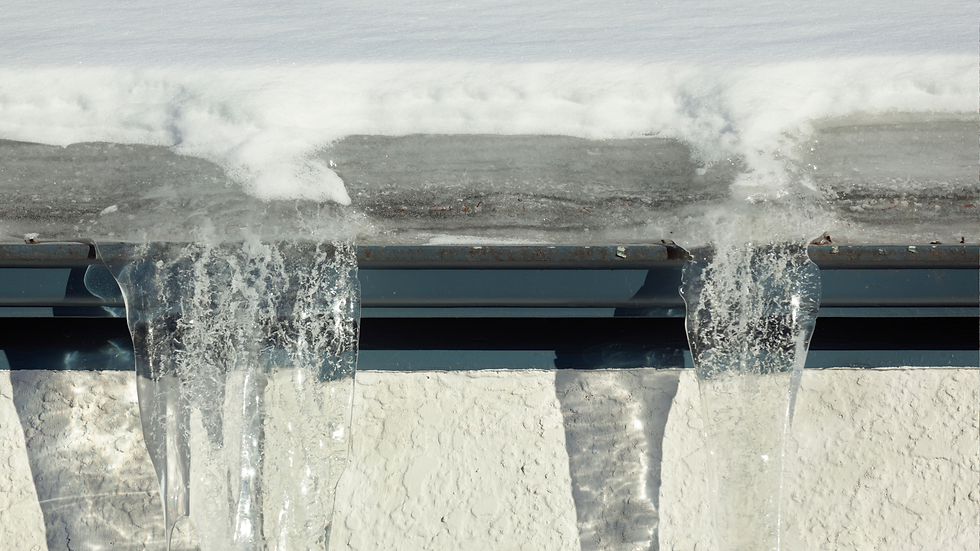
7) Do “ice dams” happen in Texas?
They’re not as common as northern states, but yes—Texas homes can still get ice buildup at roof edges during prolonged freezes, especially if:
The attic is warm from poor insulation/air sealing
Ventilation is weak
Gutters are clogged and holding water
The bigger issue in Texas is often freeze-thaw + drainage + condensation, not massive ice dams like up north—but the result can look similar: water where it shouldn’t be.
8) Are shingles more likely to crack in cold weather?
Yes. Asphalt shingles can become more brittle in cold temperatures. That’s why winter issues often show up as:
Cracked ridge caps
Split shingles near edges
Seal strips that don’t re-bond well after being lifted by wind
If your roof already has hail bruises or age wear, cold weather can accelerate failure.
9) Can I do roof repairs in winter?
Most of the time, yes depending on conditions. A reputable roofer can often repair winter damage safely when:
The roof surface is dry
Temperatures allow materials to seal properly
Wind conditions aren’t dangerous
Some materials/adhesives behave differently in cold temps, so the right approach matters. Emergency leak prevention is always priority, even if a larger repair is scheduled when weather stabilizes.
10) What are the most common winter roof leak locations?
In Central Texas, winter leak calls commonly come from:
Pipe boots and vent penetrations
Flashing at chimneys and sidewalls
Valleys where water channels heavily
Skylight flashing
Roof edges where gutters/drainage problems exist
If you’re seeing a stain, don’t assume it’s “somewhere above it.” Water can travel along decking before showing up.
11) Should I file an insurance claim for winter storm roof damage?
Maybe—but only after you know the damage is real and significant. The best move is:
Get a professional inspection and photo documentation
Compare likely repair/replacement cost to your deductible
Review whether damage is storm-related vs wear and tear
If winter wind or falling limbs caused damage, that’s often more clearly claim-related than “old roof issues.”
12) What should I NOT do after winter roof damage?
Avoid these common mistakes:
Don’t climb a wet/icy roof
Don’t pressure wash your roof in winter
Don’t ignore small stains (they grow)
Don’t let someone “patch it quick” without checking flashing/attic
Don’t sign with the first storm chaser who knocks
Fast, cheap fixes often become expensive redo’s.
13) How often should I get my roof inspected?
A good rule in Texas:
Once per year, plus
After any major storm (hail, high wind, heavy freeze event)
Inspections catch small issues early—especially flashing, ventilation, and gutter-related problems that become winter leaks.
14) What upgrades help a roof handle Texas storms and winters better?
If your roof is nearing replacement time, upgrades can make a big difference:
Class 3 or Class 4 impact-resistant shingles
Synthetic underlayment
Better attic ventilation (balanced intake + exhaust)
Improved flashing details
Gutter/drainage improvements
A replacement is your best chance to not just restore the roof—but improve it.
15) When should I call a roofer immediately?
Call ASAP if you have:
Active dripping
Growing ceiling stains
Wet insulation or visible attic moisture
Missing shingles after wind
Tree limb impact
Gutters pulling away or water pouring behind them
Winter moisture problems usually get worse—not better—without action.
Need a Winter Roof Inspection?
If you’re dealing with a stain, suspect condensation, or just want peace of mind after a freeze or winter storm, Shield & Shelter Roofing can help with a thorough inspection and clear answers.
We serve Stephenville, Granbury, Tolar, Dublin, and surrounding Central Texas areas—and we don’t just fix roofs, we upgrade them!


Comments